pH 1–3
Red to pink-red
Strong acid: lots of vinegar, lemon juice.
Game Tailors
Source: Red cabbage indicator: a pH test from your kitchen
The drawing app where the paper is real. No ads, no accounts, no data collected.
Game Tailors · Schieweg 15Y-40, 2627 AN Delft (NL)
KvK 92437702 · VAT NL866044474B01
info@gametailors.com · +31 6 4227 5919
© 2026 Game Tailors
Kitchen science experiment
Red cabbage juice is a natural pH indicator. Its purple dye turns pink to red in acids like vinegar and lemon juice, stays purple when neutral, and goes blue then green in alkalis like baking soda and soap, because the dye changes shape with acidity.
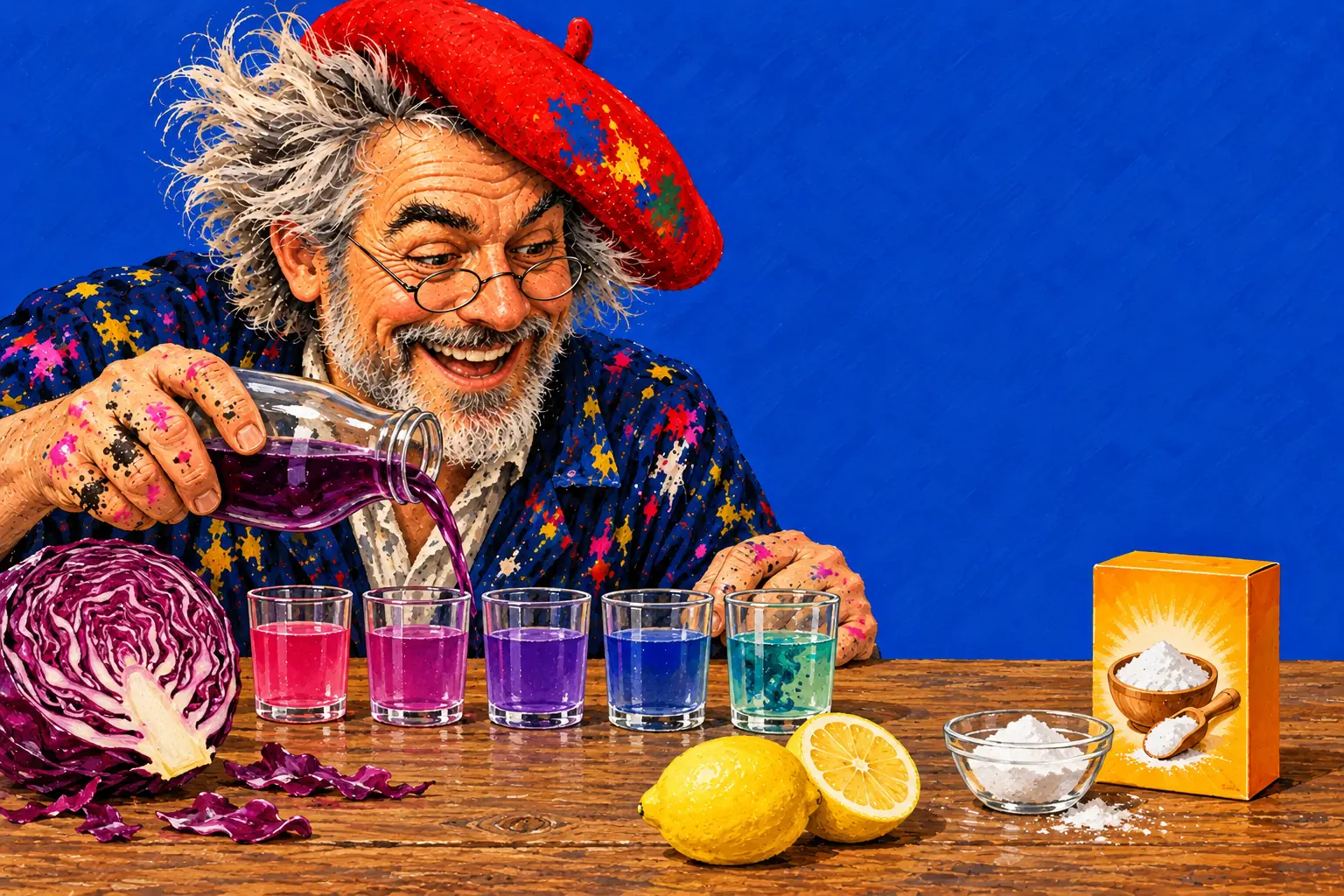
This is the app's signature science, and it's all free.
In the Science tab, pick Red cabbage juice and paint purple stripes. Drip Vinegar on one and it turns pink. Shake Baking soda on another and it goes blue, then green. A touch of Dish soap turns it blue to teal.
Or open the Time tab and tap Dip in red cabbage juice: the whole sheet soaks purple and dries into your own pH paper. Paint on it with lemon juice (Secret ink), vinegar, soap or baking soda and watch the colours bloom.
Lay a red cabbage slice and a lemon slice (Kitchen) side by side and see what happens where their juices meet.
Bleach turns the purple yellow and then destroys the dye. That one stays on the screen: never test bleach at home.
The colours follow the real cabbage chart, pH step by pH step, and they change live, so you can push a stripe from pink back to purple and on to green. Even other kitchen things act as indicators: a smear of mustard turns red with soap, and tea goes paler with lemon.
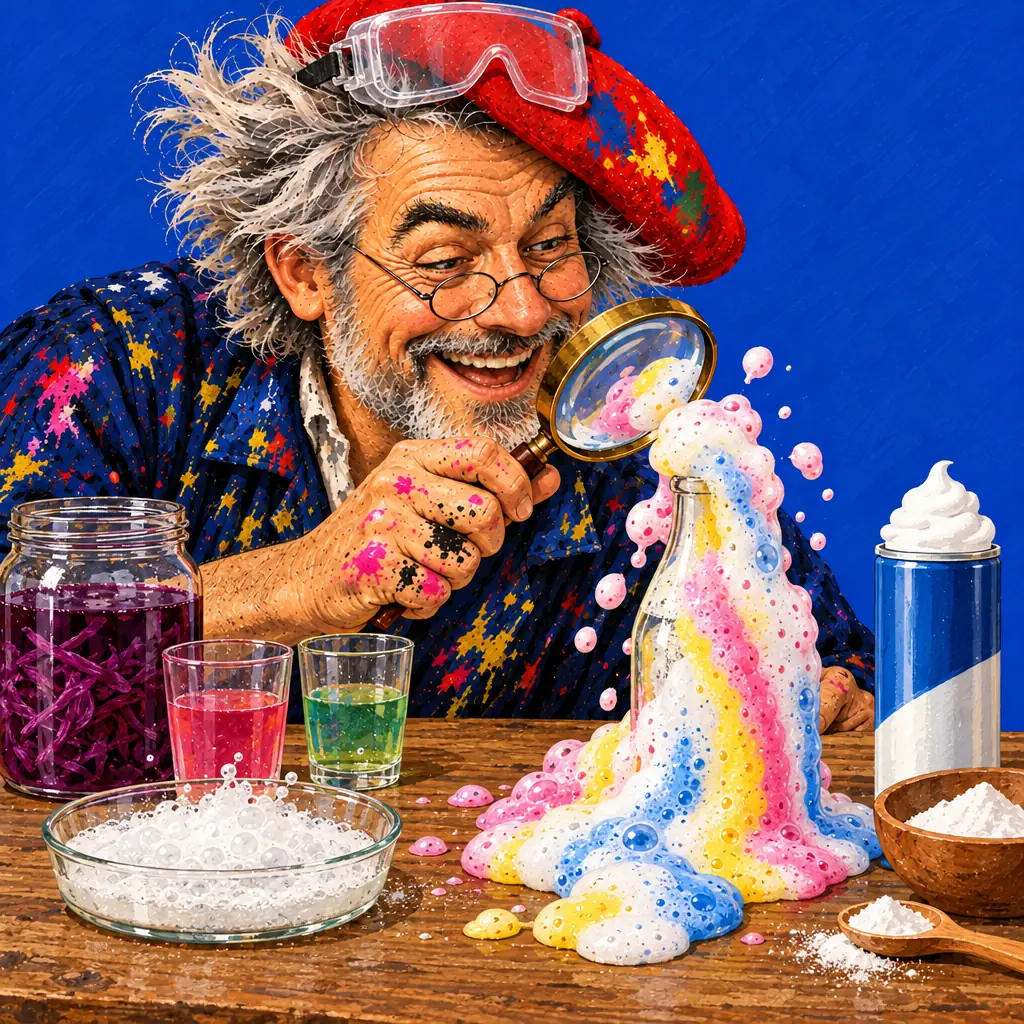
Line your glasses up from red to green and you've built the pH scale. Roughly:
pH 1–3
Strong acid: lots of vinegar, lemon juice.
pH 4–6
Weak acid: a little vinegar, sparkling water, apple juice.
pH 7
Neutral: tap water, milk.
pH 8–9
Weak alkali: egg white, a little soap.
pH 10
Soapy water, baking soda in water.
pH 11–12
Lots of baking soda in a little water.
pH 13
Bleach and other very strong alkalis. On screen only.
You need
A quarter of a red cabbage
A heatproof jug or bowl, a kettle, and a sieve
Six or more clear glasses or jars, and teaspoons
Things to test: vinegar, lemon juice, baking soda (bicarbonate of soda) stirred into water, soapy water or washing-up liquid, tap water, milk
Labels or sticky notes
Old clothes or an apron: the juice stains
Never test: bleach, oven cleaner, drain cleaner or other cleaning products.
An adult chops the cabbage into small pieces, puts them in the jug and pours just-boiled water over them.
Leave it for 15 to 20 minutes, until the water is dark purple and has cooled down.
Pour it through the sieve. The purple juice is your indicator; the cabbage can go in the compost or the soup.
Pour a few centimetres of juice into each glass and label one for each thing you'll test, plus one with nothing added to compare with.
Guess a colour for each, then stir in a teaspoon of one test item per glass. Watch the colour change.
Put the glasses in order from red through purple to green. That's your own pH scale.
Bonus
Soak coffee filters or strips of kitchen paper in strong cabbage juice and let them dry flat. You now have purple test paper, just like the app's Dip in red cabbage juice. Paint on it with a cotton bud dipped in lemon juice, vinegar or baking-soda water, or write a secret message in lemon juice that turns pink as you write. Dipping the paper twice makes it deeper purple.
The purple in cabbage is a colour-changer. Sour things like lemon and vinegar turn it pink, and soapy, slippery things like baking soda and soap turn it blue and green.
For grown-ups. The colour comes from anthocyanins, the same family of pigments that makes blueberries, red grapes and red onion skins dark. An anthocyanin molecule gains or loses hydrogen ions depending on how acidic its surroundings are, and each form absorbs light differently: red in acid (low pH), purple near neutral (pH 7), blue to green as it gets more alkaline (high pH). At very high pH, around 13, it turns yellow and the molecule starts to fall apart, which is why bleach makes it yellow and then colourless. Acids and alkalis are measured on the pH scale from 0 to 14; an indicator is any substance whose colour shows where on that scale a solution sits.
For teachers
Indicators and the pH scale are KS3 chemistry (acids and alkalis), and red cabbage makes a perfect upper-KS2 extension. It fits NGSS 5-PS1-3 (identify materials based on their properties). On the whiteboard the app can show the one test you can't do in class, bleach turning the juice yellow, alongside the safety message about never mixing bleach with acids.
Its purple pigment, an anthocyanin, changes shape depending on how acidic or alkaline its surroundings are, and each shape reflects a different colour: red and pink in acids, purple when neutral, blue and green in alkalis.
Pink to red. Vinegar is an acid; the more you add, the redder it gets. Lemon juice does the same.
Blue-green to green. Baking soda is an alkali (a base); add more and it gets greener.
Bleach is a very strong alkali and it also destroys the dye, so the juice turns yellow and then fades. Never try it at home: you can see it safely on screen in Extreme Drawing instead.
A few days in the fridge in a closed jar. For longer, freeze it in an ice-cube tray and thaw a cube when you need it, or dry it into pH paper.
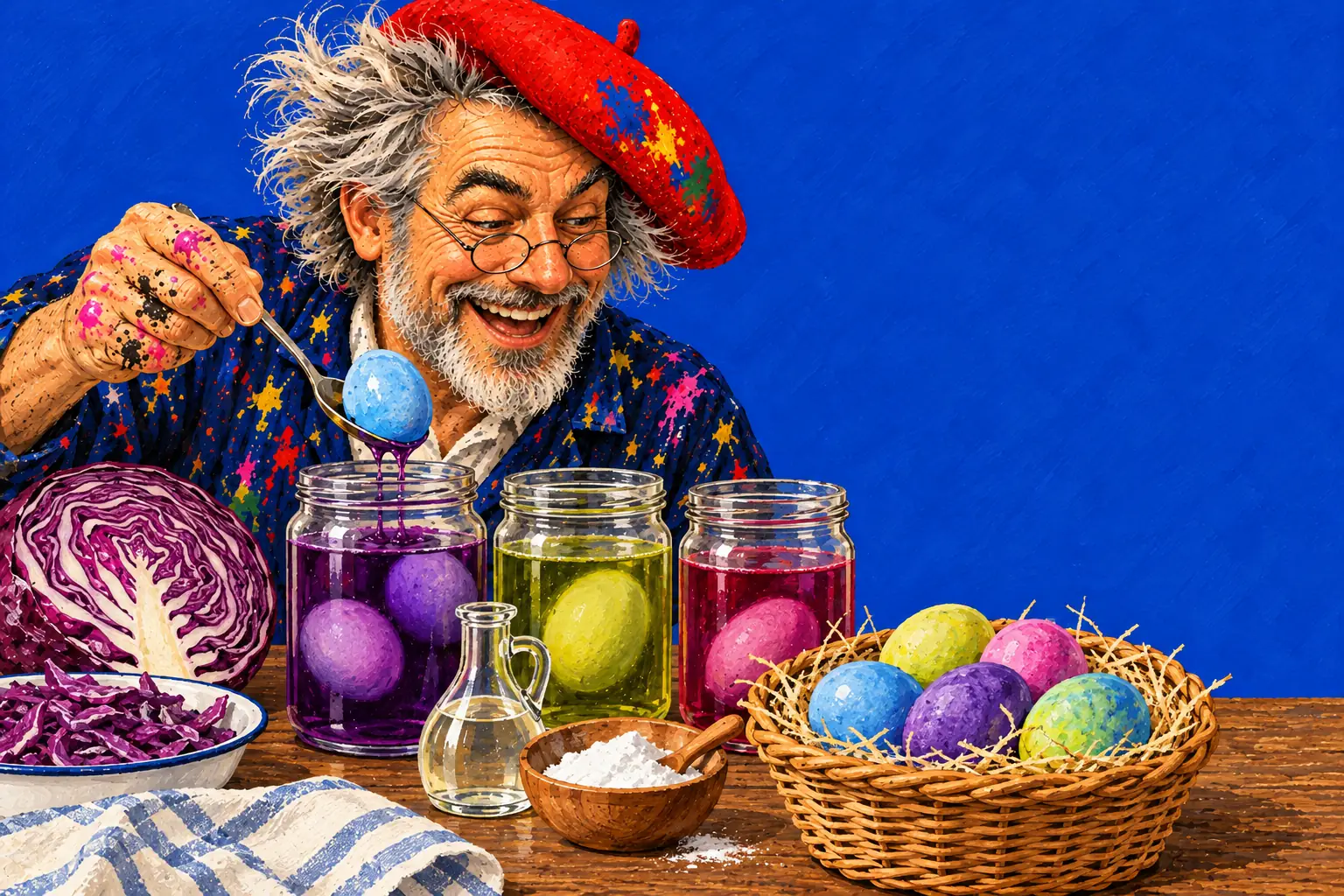
The same juice dyes eggs a beautiful blue. The seasonal how-to.
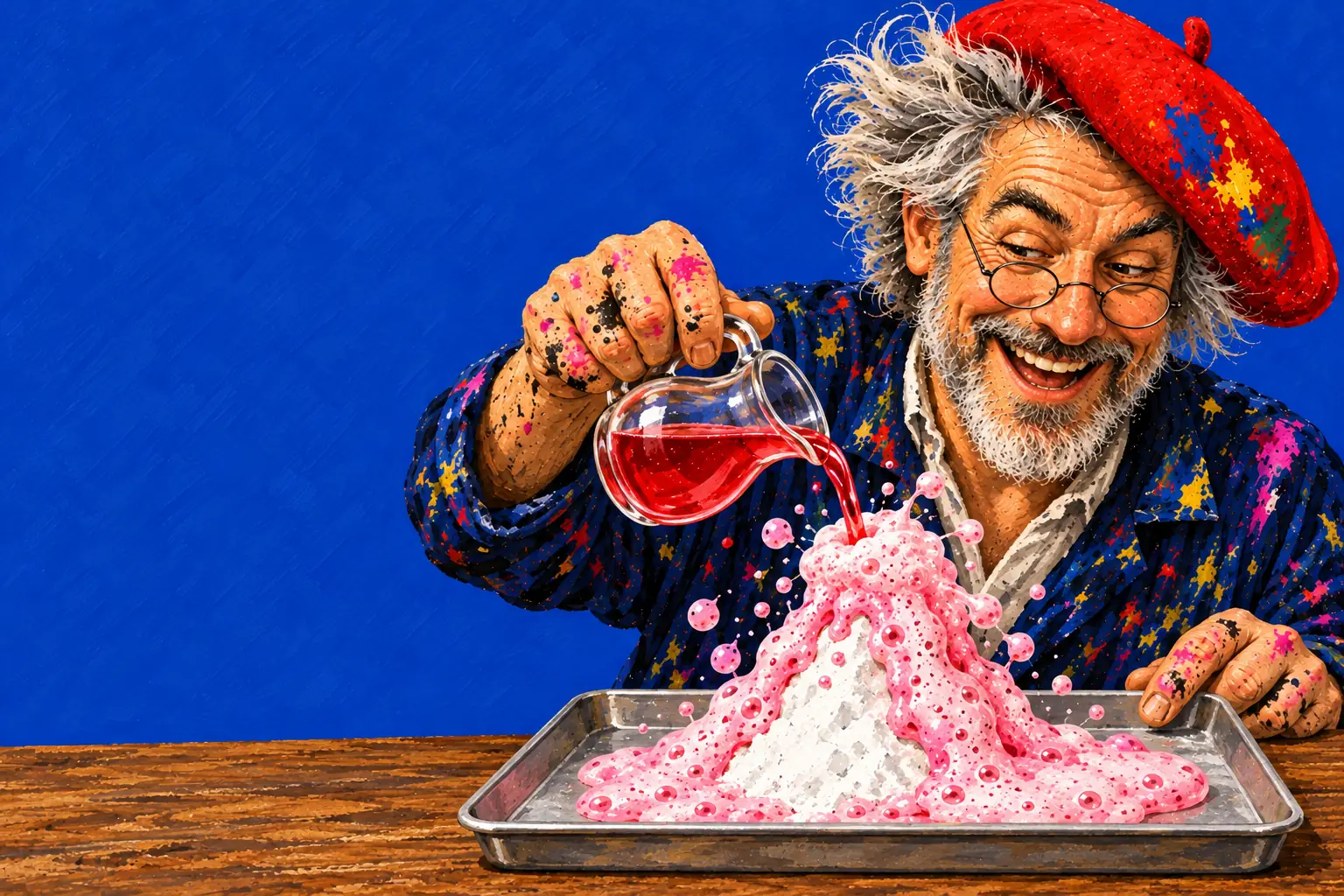
An acid meets an alkali and they fizz into foam.

Why bleach stays on the screen, and what to do if it happens.