
Too little juice
Thin, quick lines barely show. Go over the letters twice with a well-soaked cotton bud.
Game Tailors
Source: Invisible ink with lemon juice: how heat reveals it
The drawing app where the paper is real. No ads, no accounts, no data collected.
Game Tailors · Schieweg 15Y-40, 2627 AN Delft (NL)
KvK 92437702 · VAT NL866044474B01
info@gametailors.com · +31 6 4227 5919
© 2026 Game Tailors
Kitchen science experiment
Write with lemon juice and it dries invisible. Warm the paper and the writing slowly turns brown, because the sugars and acid in the juice brown at a lower temperature than the paper does. The heat changes them for good, so the message stays.
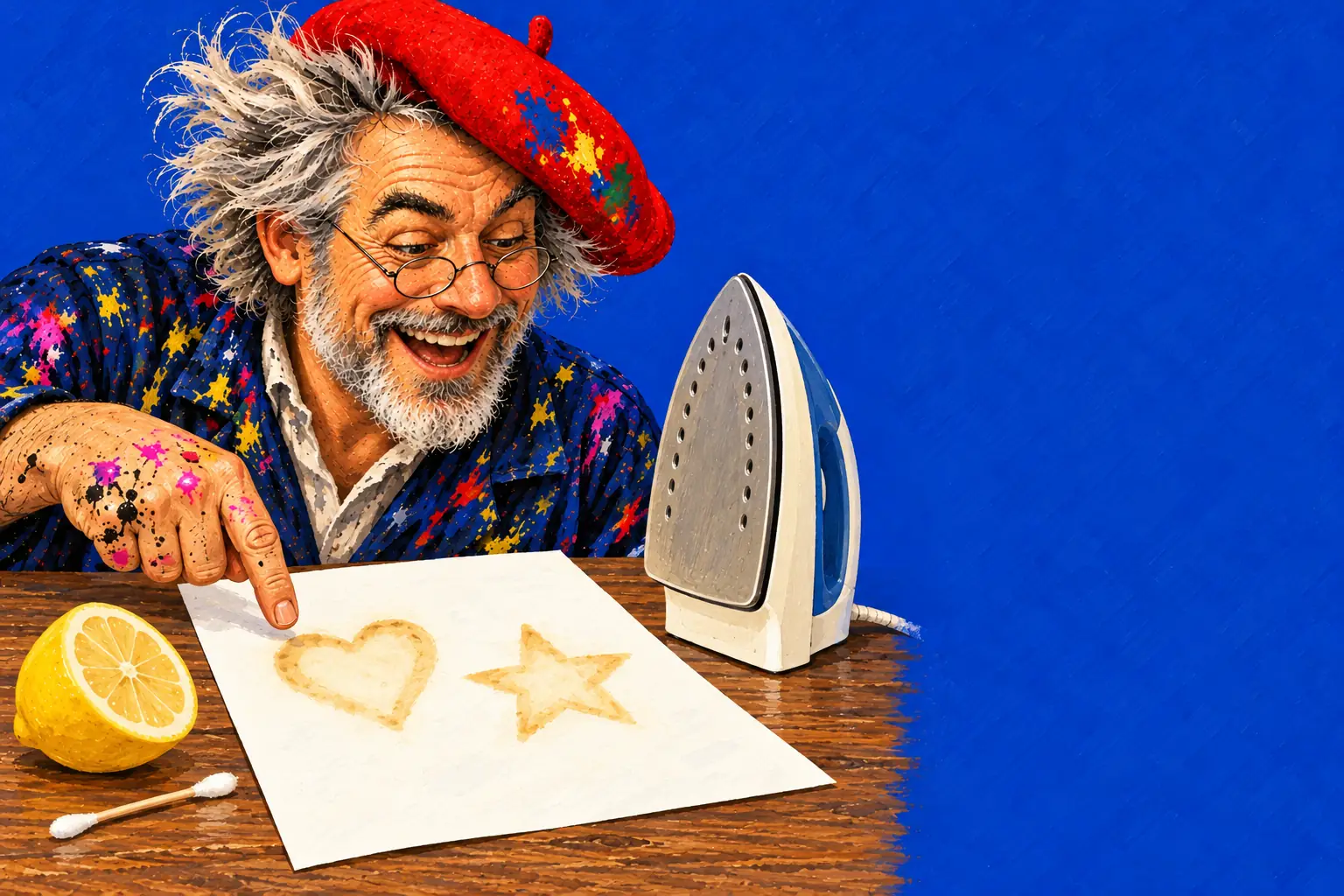
In the free Science tab, tap Secret ink and choose Lemon juice ink (or Milk ink). Write or draw on the paper: you only see a faint damp line, and as it dries it disappears completely.
Now heat it. Take the Iron from the free Toolbox tab and slide it over the paper: brown writing appears wherever you wrote, and nowhere else. Keep the iron moving, though. Hold it still for more than a second or so and it scorches an iron-shaped brown mark into the paper, which is exactly what a real iron does.
Other ways to reveal it in the app: the Magnifying glass (Toolbox), Bake in the oven on the Time tab, and the Hair dryer (in the full toolbox). On screen even a nearby flame brings the writing out. At home, never: heat is a grown-up's job, and no candles.
A secret trick: dip the paper in red cabbage juice (Time tab) and lemon writing shows up pink straight away, no heat needed, because lemon is an acid. Milk writing doesn't.
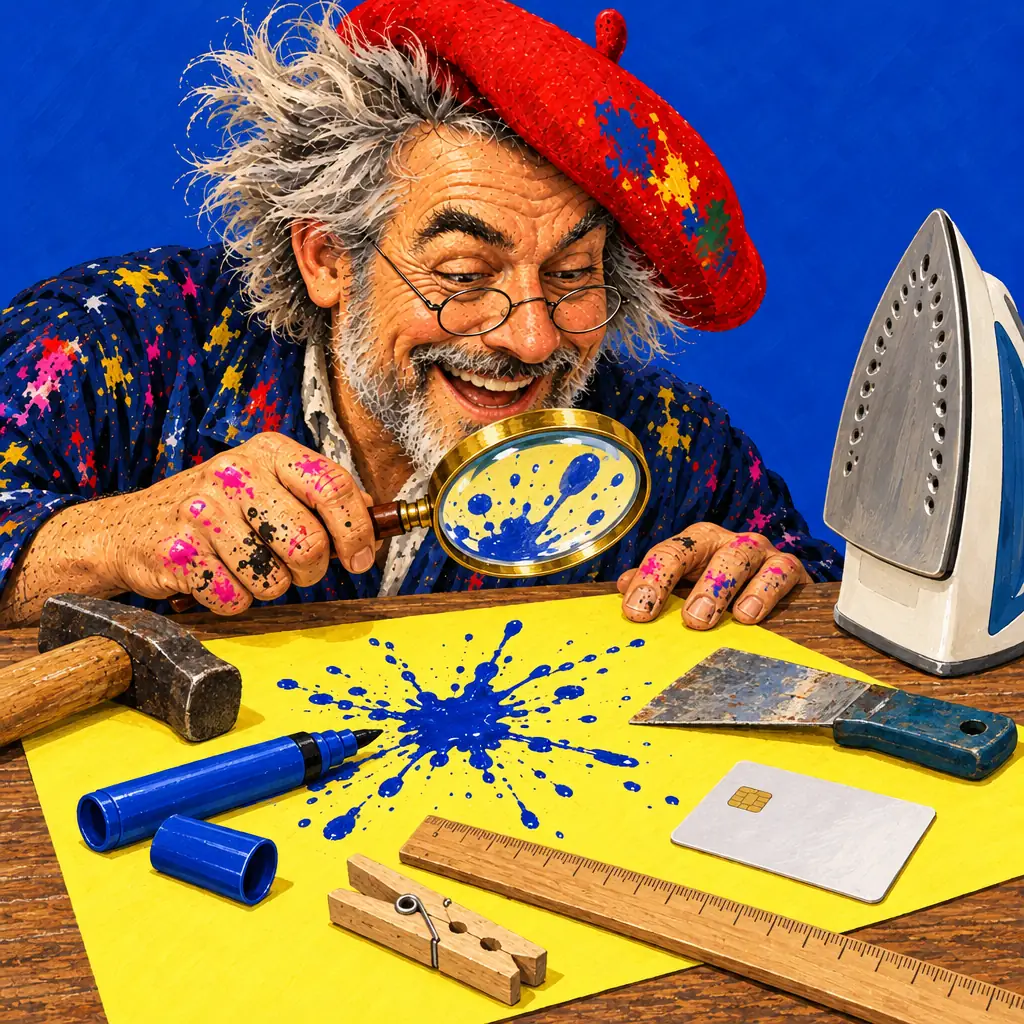
You need
Half a lemon, or bottled lemon juice
A small bowl
Cotton buds or a thin, clean paintbrush
Plain white printer paper (thin paper works best)
A hair dryer, or an adult with an iron (no steam) or an oven
A tea towel, if you're using the iron
Squeeze the lemon into the bowl. A few drops of water are fine; too much makes the writing faint.
Dip the cotton bud and write or draw in big, thick lines. Dip again often: more juice means darker writing.
Leave it for about ten minutes until the paper is dry and the writing has vanished. Swap papers with someone if you like.
What colour will the writing come back? Will the whole page change colour, or only the letters?
Hair dryer: an adult holds it on hot, close to the paper, moving it around for a few minutes. Iron: an adult irons the paper on a tea towel, medium heat, no steam, keeping the iron moving. Oven: an adult puts the paper on a baking tray at 180 °C (350 °F) for a few minutes and watches through the door.
The writing turns light, then darker brown. Stop as soon as you can read it, before the paper itself starts to brown.
Lemon juice has a tiny bit of sugar in it. When you warm the paper, the sugar in your letters turns brown before the paper does, a bit like toast, so your secret appears.
For grown-ups. Lemon juice is mostly water with sugars and citric acid dissolved in it. When it dries, those soak into the paper fibres, invisible. Heat makes the sugars and other organic compounds in the juice break down and brown, the same kind of browning as caramelising sugar or toasting bread. They brown at a lower temperature than the paper's own cellulose scorches, and the acid weakens the fibres it touches, so the writing darkens first while the rest of the sheet still looks white. That's why the timing matters: heat too long and the whole page browns. The browning can't be undone, so this is an irreversible change. Milk works the same way, with the sugar lactose and milk proteins doing the browning.
For teachers
A gentle, safe example of a change caused by heating that can't be reversed: it fits NGSS 2-PS1-4 (some changes caused by heating or cooling can be reversed and some cannot) and KS2 Year 5 properties and changes of materials (irreversible changes). In class, reveal messages with the app's iron on the whiteboard, and use a hair dryer for the real sheets.
Write on white paper with lemon juice and a cotton bud, and let it dry until it disappears. To read it, an adult warms the paper with a hair dryer on hot, an iron without steam, or briefly in the oven, and the writing turns brown.
Yes. Use the hot setting, hold it close and keep it moving for a few minutes. It's slower than an iron, but it's the safest way to do it at home.
The sugars and acid in the dried juice brown at a lower temperature than the paper itself, a bit like sugar caramelising. So the letters darken before the rest of the page does.
No. Paper catches fire easily over a flame, so never use candles, lighters or a hob. A hair dryer, an iron or the oven, worked by an adult, does the job safely.
Milk, apple juice and other sugary juices brown with heat the same way. Lemon juice can also be revealed without heat: it turns pink on paper soaked in red cabbage juice.

Turn lemon juice pink and baking soda green with one purple juice.

Another secret message: white crayon that appears when you paint over it.

Tea-stained paper with tide lines, for a map to hide your secret on.