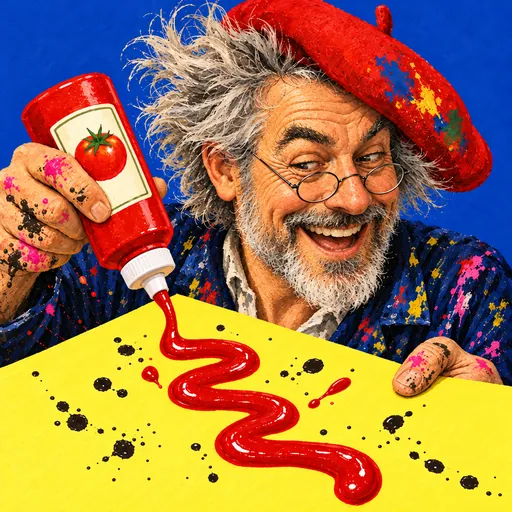
Spring flowers
Pink and yellow bubble prints as flower heads, then draw stems and leaves with a marker.
Game Tailors
Source: Bubble painting for kids: print the patterns of bubbles
The drawing app where the paper is real. No ads, no accounts, no data collected.
Game Tailors · Schieweg 15Y-40, 2627 AN Delft (NL)
KvK 92437702 · VAT NL866044474B01
info@gametailors.com · +31 6 4227 5919
© 2026 Game Tailors
Toy box → Bubbles (in the full toolbox) has Soap bubbles and three bubble paints: Blue, Pink and Yellow.
Hold the wand and bubbles stream out. Wave it and you get more of them, smaller the faster you wave, flung the way you swing.
The bubbles float wherever the air goes, wobbling as they drift down; bigger ones sink faster.
A bubble-paint bubble that pops on the paper prints a ring of colour with smaller lacy rings inside, like the film breaking into cells.
On something wet, a bubble doesn’t pop at once: it sits there as a glistening dome for a few seconds.
Plain soap bubbles popping on wet paint push the colour into a faint ring and leave a soapy ring that paint takes less well afterwards.
Also try: the fan or hair dryer (Bathroom, also in the full toolbox) to blow the bubbles across the page.
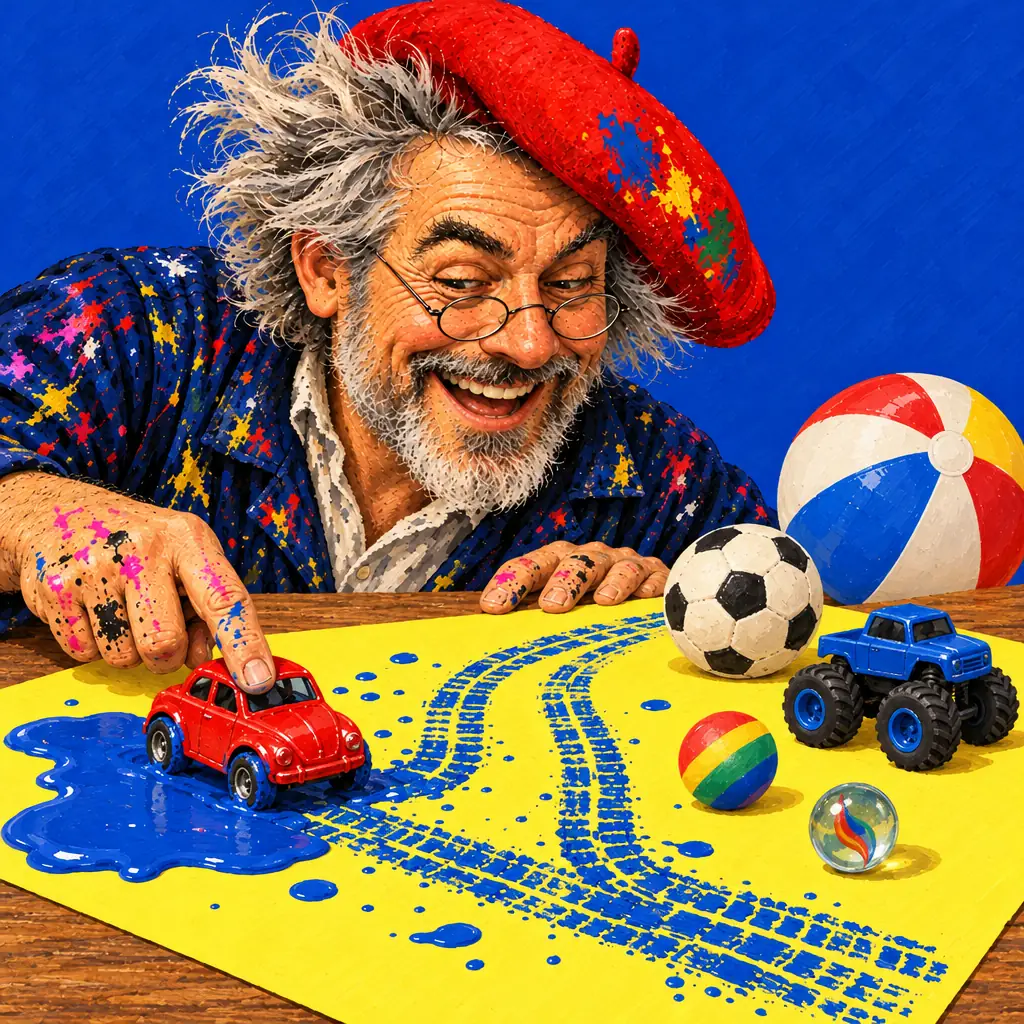
Pink and yellow bubble prints as flower heads, then draw stems and leaves with a marker.
Blue and green prints for the water, with fish drawn on top.
Cover a big sheet of paper in overlapping colours for wrapping presents.
Outside, mix colour into bubble mixture and blow bubbles from a wand at paper pegged to a fence.
The bubbles fly and drift across the page and each pop prints at once, with no straws and nothing to spill. On wet paint they sit as domes for a moment first. Bubbles is a Toy box tool in the full toolbox.
The foam stays in the cup and you bring the paper to it. Prints come out paler and more random; more paint gives stronger rings. Outside, bubbles from a wand land wherever the wind takes them, much like in the app.
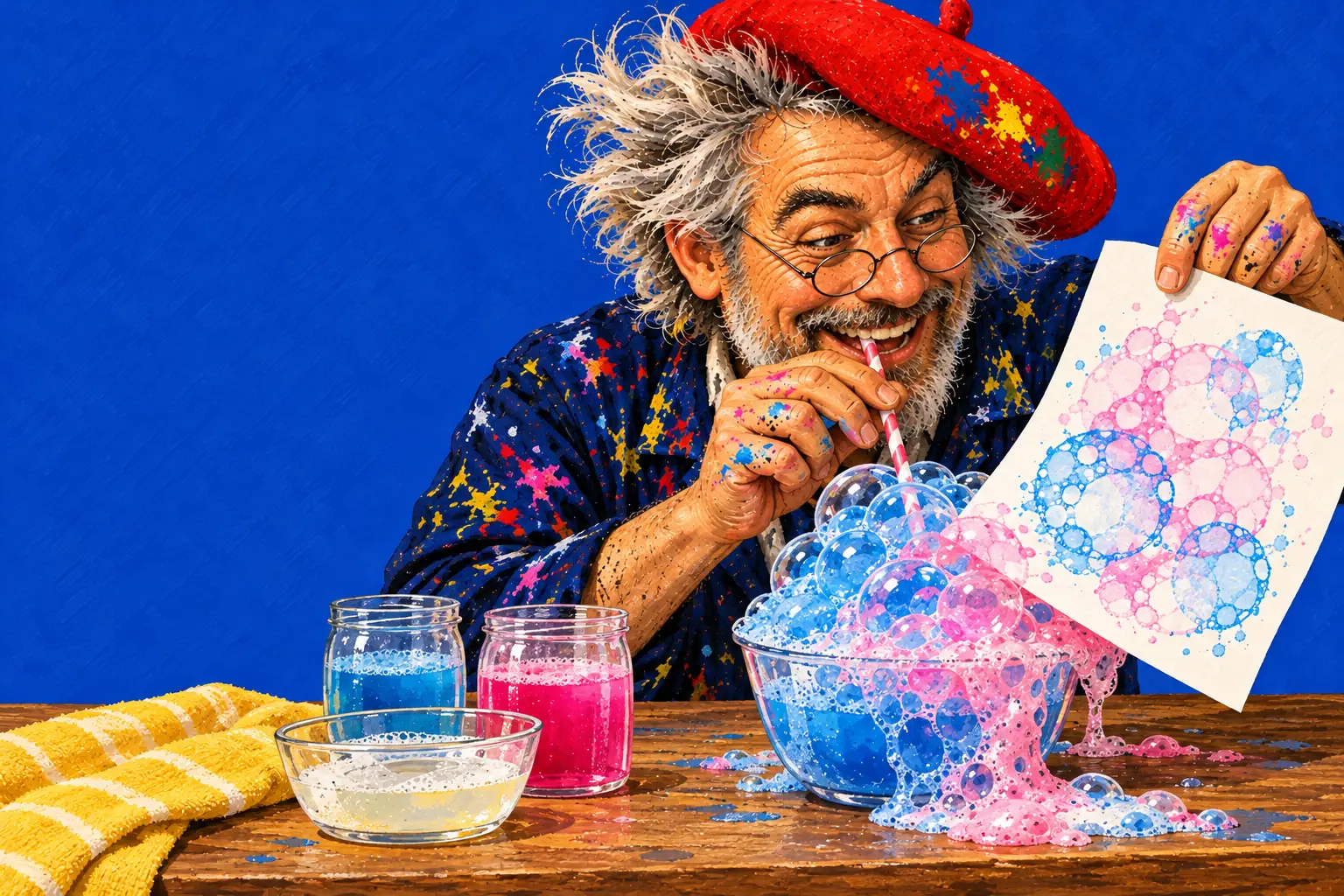
A bubble is a thin skin of soapy water wrapped around air. The colour is in the skin, so when the bubble pops, the skin lands on the paper as a ring.
For grown-ups. Soap is a surfactant: its molecules line both sides of a thin water film and keep it from snapping, so bubbles last. A bubble’s colour lives in that film. Foam is many bubbles sharing walls, and where the walls touch the paper they print the foam’s honeycomb; a popping film pulls back to its rim and leaves a ring. On a wet surface the film loses water more slowly, which is why bubbles last longer on wet things.
Mix about a quarter of a cup of water with 2 tablespoons of dish soap and a good squeeze of poster paint or a few drops of food colouring. Stir gently so it doesn’t foam until you blow.
Only if a grown-up does the blowing. Toddlers often suck instead of blowing, so let them press the paper onto the foam while you make the bubbles.
Add more paint to the mix, use bright colours and touch the paper to fresh foam. Food colouring gives paler prints than paint.
Yes: mix colour into bubble solution and blow bubbles at paper, ideally outdoors. You get separate rings rather than a foam pattern.
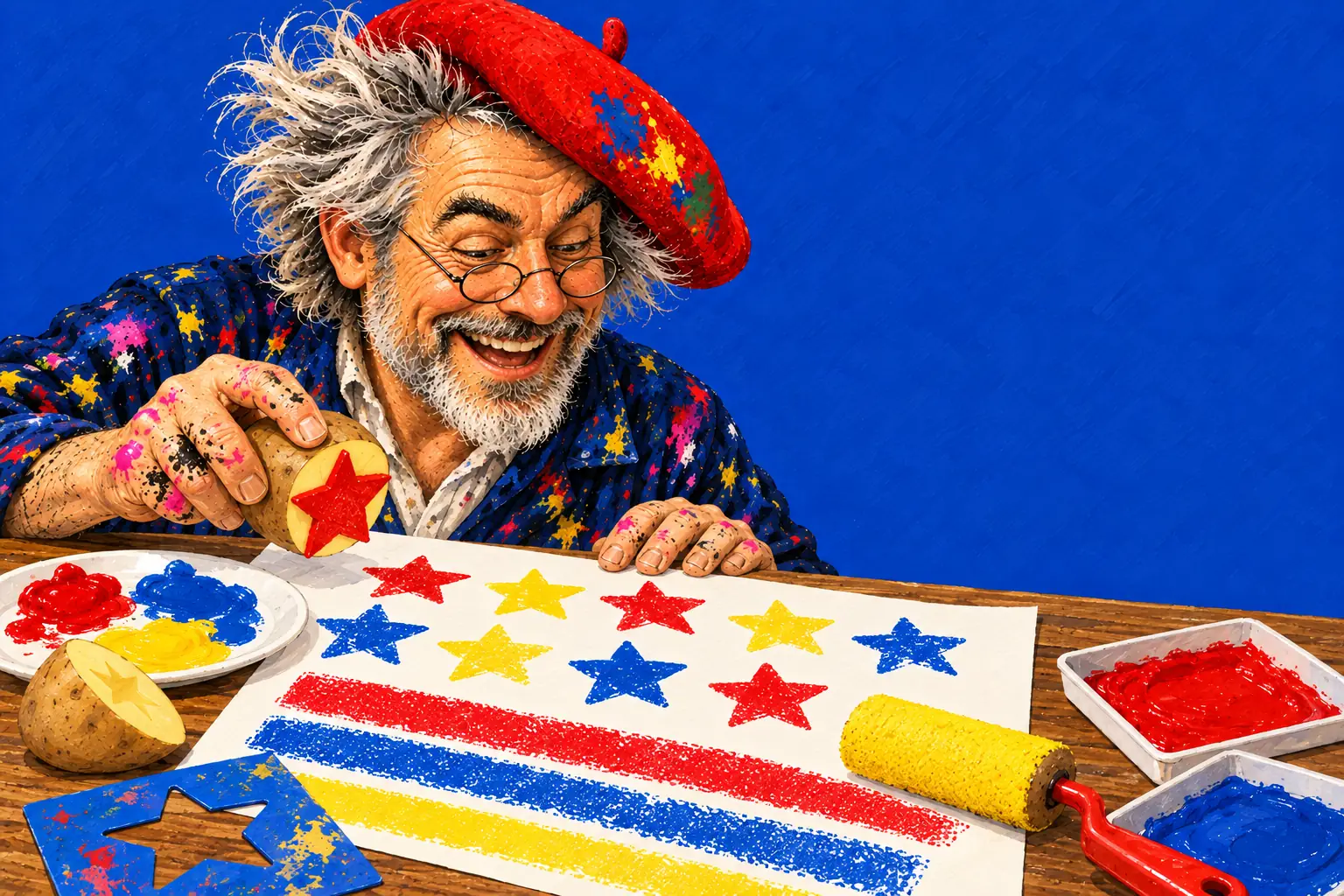
More ways to print: potato stamps, rollers and cut stencils.
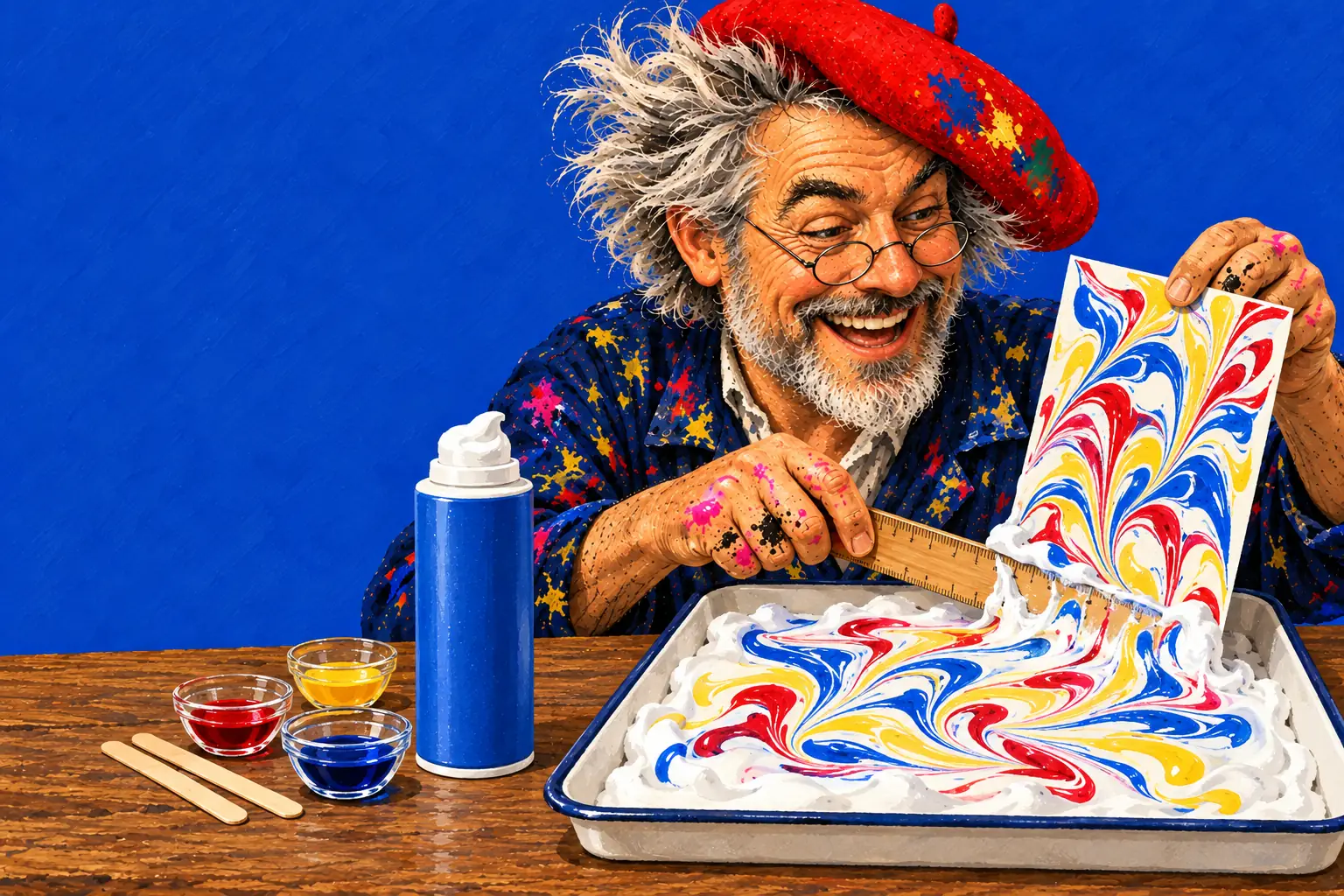
Swirl food colouring on foam and print it.
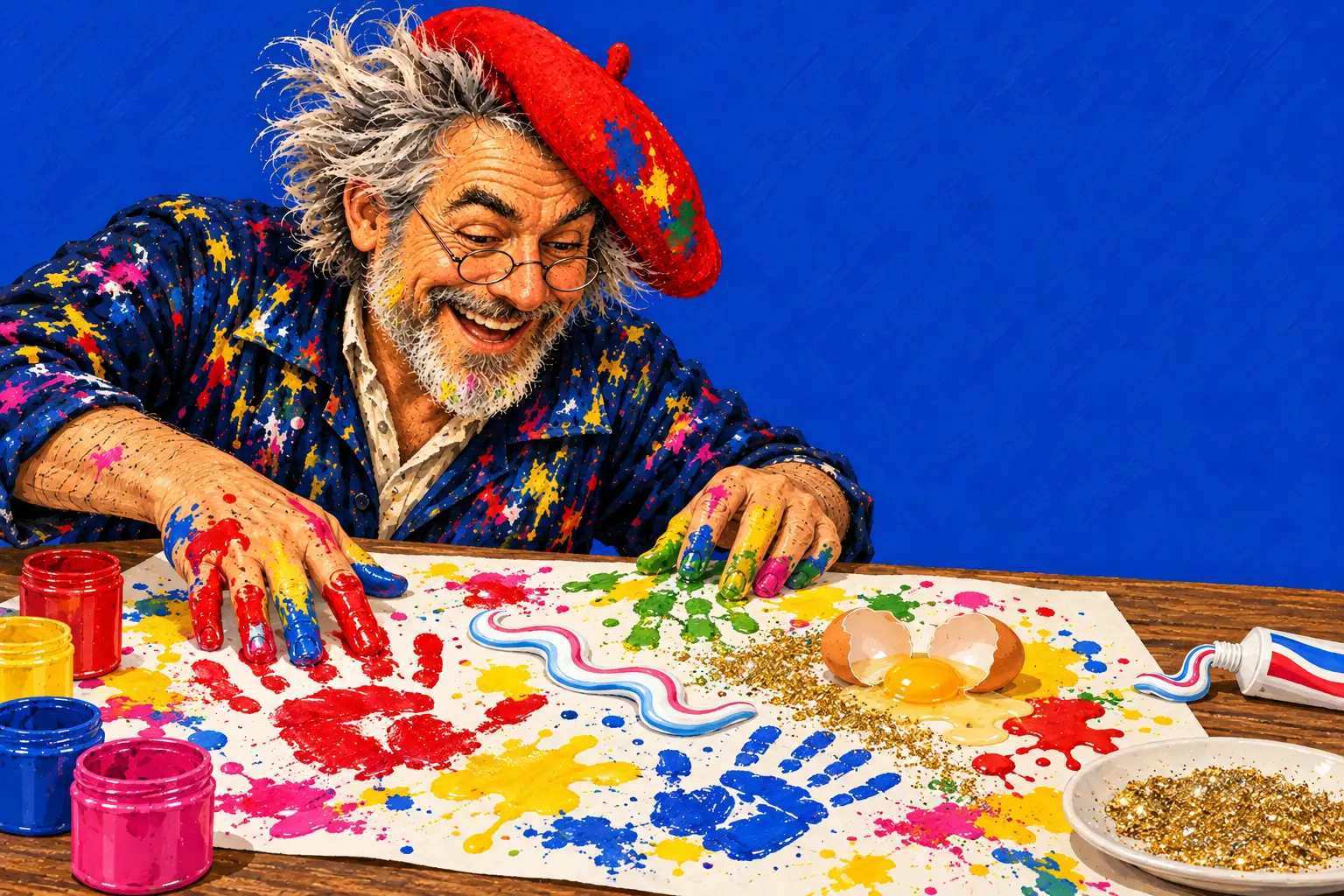
The big list of gloriously messy ideas.