
Easter eggs
Cut egg shapes out of card before you print, for a row of marbled Easter eggs on the window.
Game Tailors
Source: Shaving cream marbling for kids: swirl, press, scrape
The drawing app where the paper is real. No ads, no accounts, no data collected.
Game Tailors · Schieweg 15Y-40, 2627 AN Delft (NL)
KvK 92437702 · VAT NL866044474B01
info@gametailors.com · +31 6 4227 5919
© 2026 Game Tailors
Science tab → Shaving foam. Drag to squirt a thick white bed of stiff foam: the same foam as soap suds, whipped stiffer. It stands and only collapses slowly.
Science tab → Food colouring (red, blue, green or yellow). Drip a few drops on the foam. They stay where they land, as blobs of colour, instead of spreading as they would on a puddle.
Craft tab → Poke → Toothpick or Skewer (in the full toolbox). Draw it through the blobs: the colour is pulled out into streaks and veins and the foam closes in behind the stick. The colours stay apart; they don’t turn to mud.
Press and scrape. Hold the Hand still on the foam for a few seconds to press the colour into the paper, then drag the Scraper (Toolbox) across. The foam comes up on the blade and the marbled print is left on the paper.
Also try: a sticker under the foam (in the full toolbox). The foam lies on the sticker, so its colour never reaches the paper underneath.
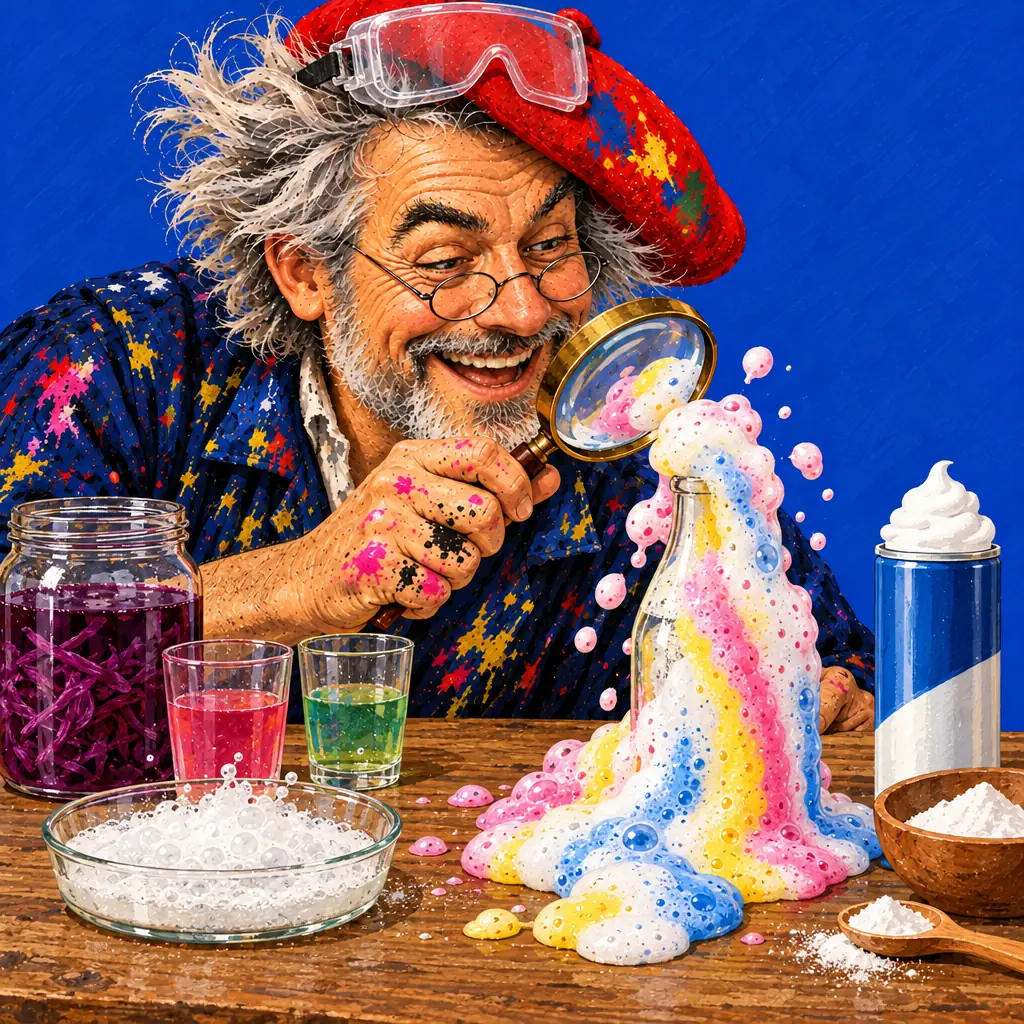
Cut egg shapes out of card before you print, for a row of marbled Easter eggs on the window.
Red, orange and yellow foam prints, cut into leaf shapes once dry.
Print a whole sheet, then cut it up: every piece has a different pattern.
Use only blue, with a lot in some places and a little in others. The veins show up even better.
The paper is already under the foam: you press with your hand and scrape the foam off the page. Colour is only moved, never made or lost, so what the paper gets, the foam loses. Shaving foam, food colouring, the hand and the scraper are free; the toothpick is in the full toolbox.
You lay the paper on top of the foam and lift it off. You can print two or three sheets from one tray, each paler than the last, and the leftover foam is wonderful to squish (then wash your hands).
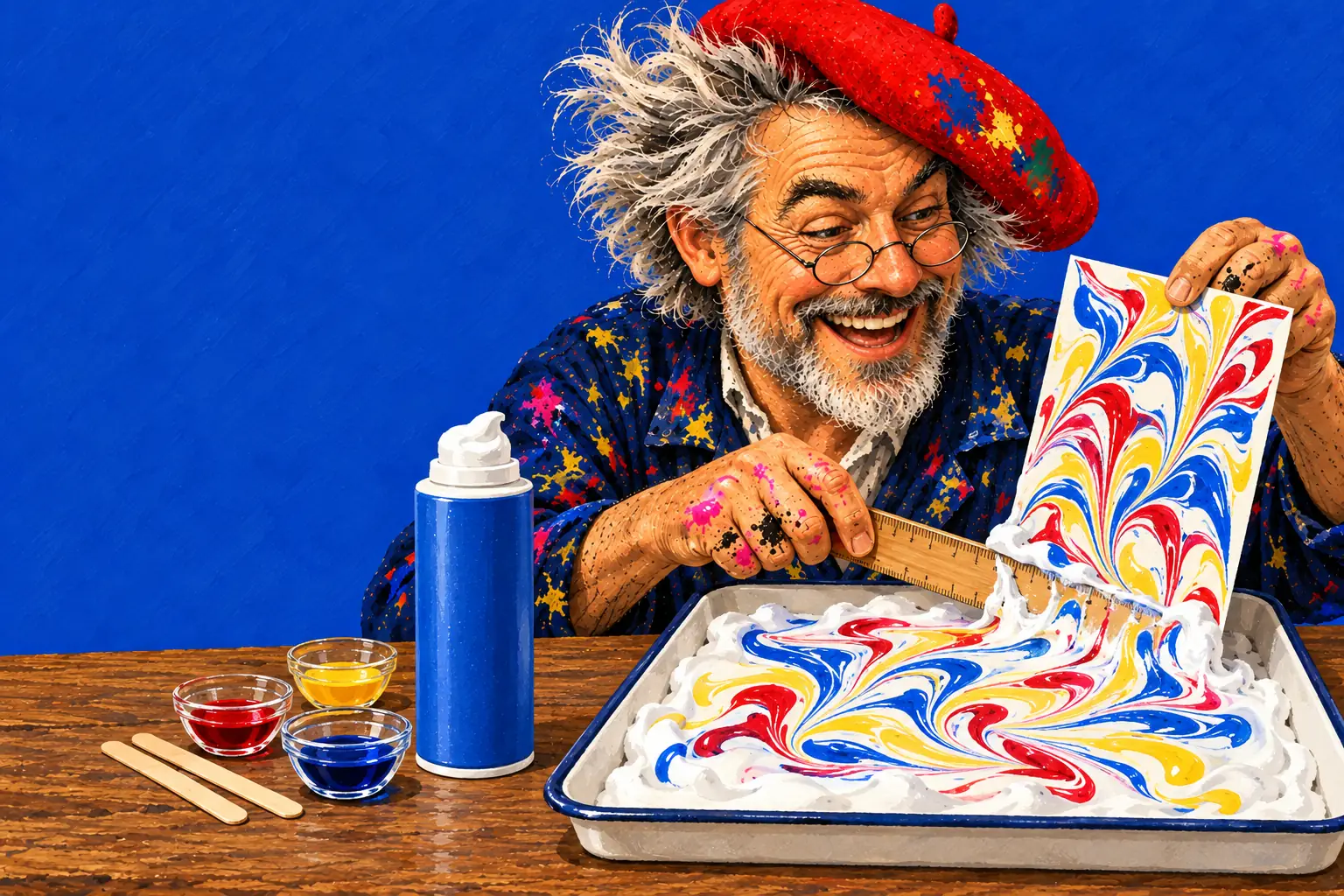
Foam is millions of tiny bubbles. Together they are stiff enough to hold a drop of colour still, so it stays exactly where you put it until a stick drags it along.
For grown-ups. Shaving foam is gas held in thin films of soapy water. It behaves like a soft solid with a yield stress: it keeps its shape, and a drop of dye in place, until it is sheared. A toothpick shears a narrow path and stretches each blob into a thin streak, the same “tine stroke” marblers make with a stylus. The dye sits in the water of the bubble walls; where the paper touches, it soaks up colour from the surface layer, and the foam scrapes off because it never soaked in. Compare magic milk, where soap makes the colour move by itself.
Plain white shaving foam that comes out of the can as foam. Gel only turns to foam when rubbed, so it is hard to spread evenly. Foam for sensitive skin is kindest to hands.
Liquid watercolour works well. Thick paint sits in lumps on top and doesn’t soak into the paper as easily.
Too much swirling mixes the colours into one. Drag the stick through only a few times, and pick colours that look good together, such as blue and yellow.
No: it soaks into the paper and stays when the foam is scraped off. Let it dry flat before you stack the sheets.
Both float colour on something white, but on milk the soap makes the colour rush away by itself. In foam the colour stays put until you move it.
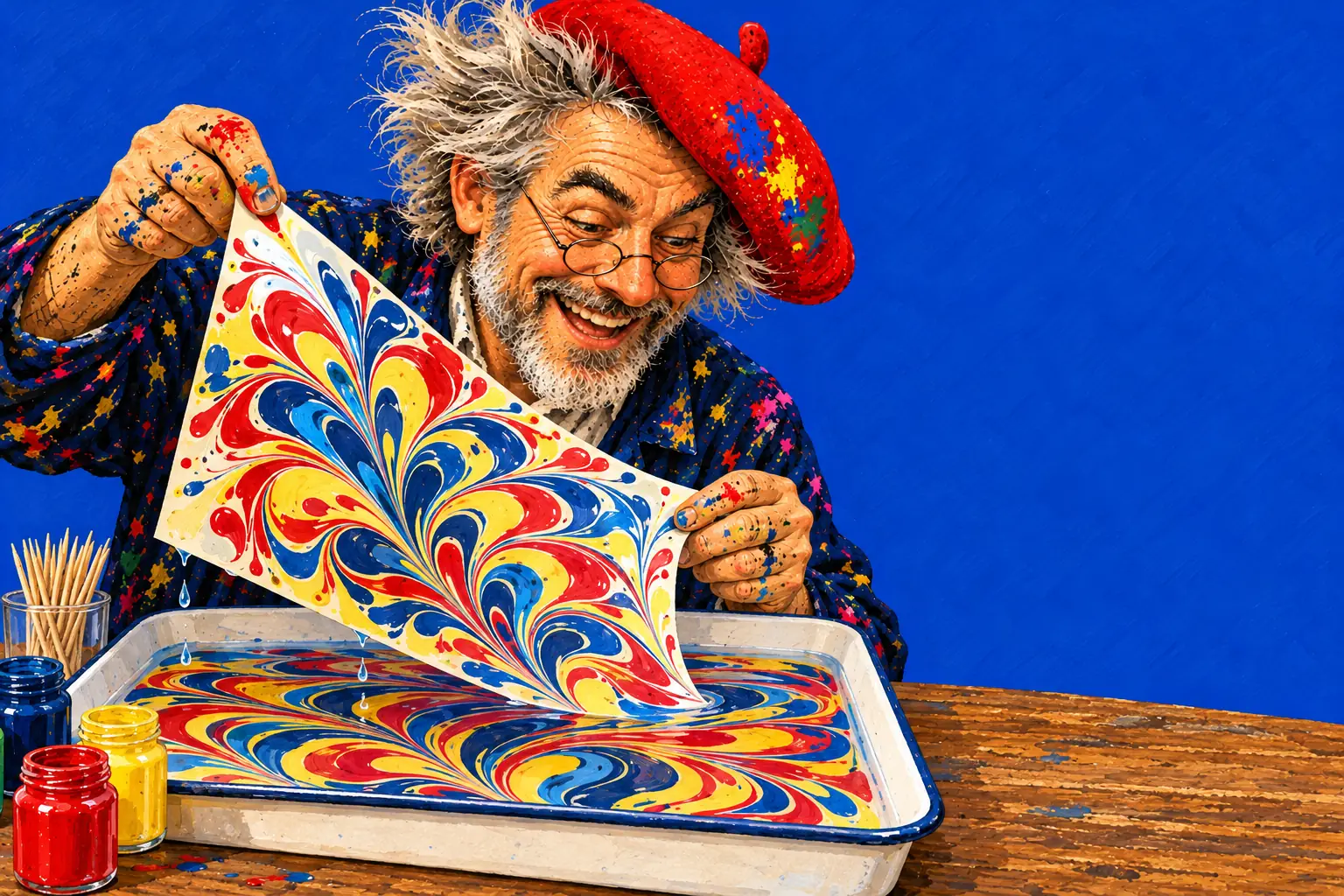
Inks that float on water spread into rings and comb into feathers.
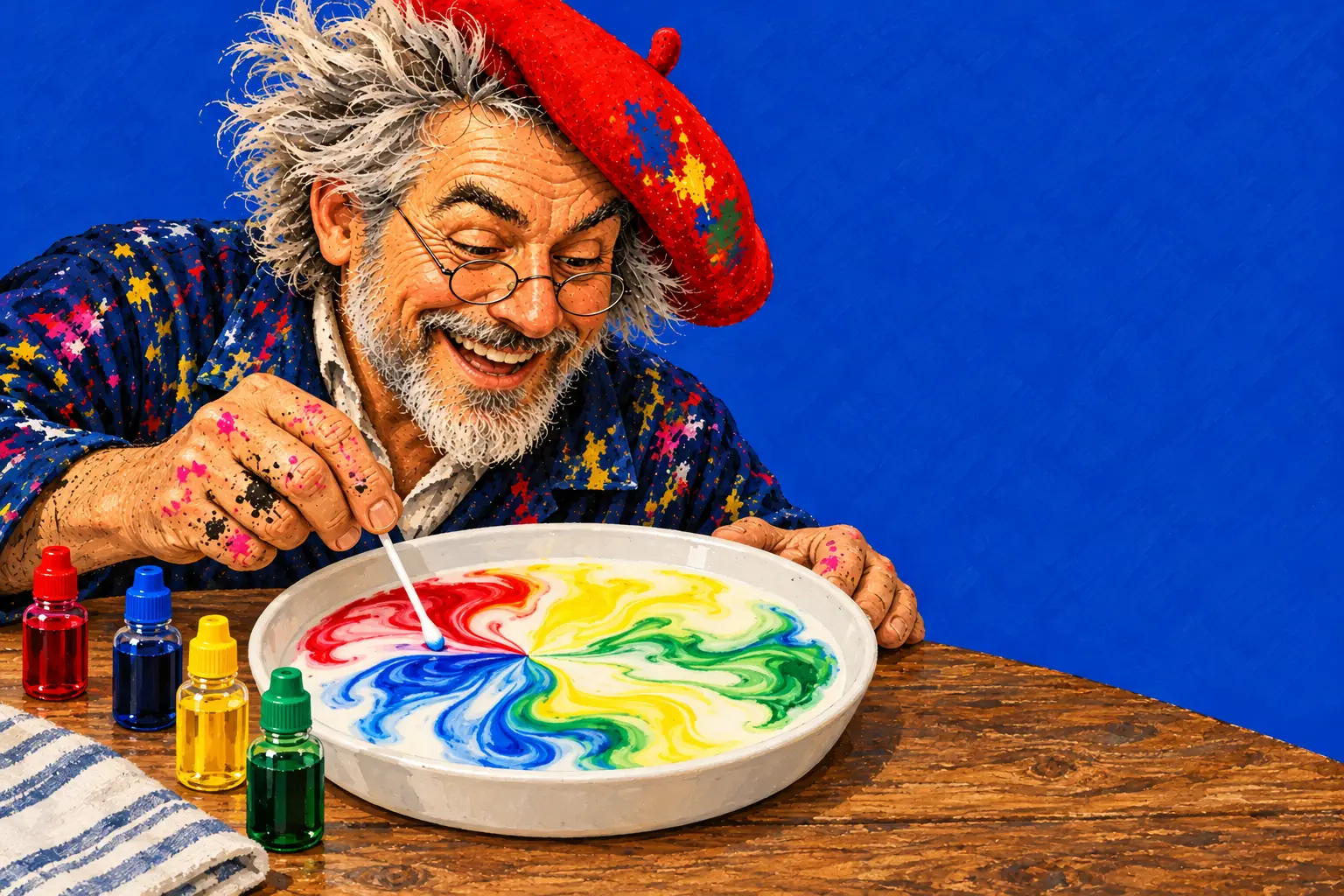
Soap sends food colouring rushing across a dish of milk.
All the mess of real play ideas, from finger paint to foam.